Dried fruit and gout: cranberries, raisins and dates
Dried fruit is low in purines, but drying concentrates the fruit's sugar several-fold. Raisins and Medjool dates are about two-thirds sugar by weight, and roughly half of that sugar is fructose (USDA). Dried cranberries are a different case: fresh cranberries have only about 4 g of sugar per 100 g, so the sweetness is added. Of 112 US dried-cranberry labels we checked, 87% list sugar as an ingredient, and the median bag runs 67.5 g of sugar per 100 g, slightly more than raisins (65 g).
What to check on the label
- Sugar listed right after the fruit, as on most dried cranberries, or a fruit-juice concentrate used as the sweetener. A little elderberry juice near the end of the list, added for color, matters far less.
- Total sugar per 100 g. Most dried fruit runs 50–70 g, so even a handful is a real sugar load.
- Portion. A small 30 g handful of golden raisins carries about 10 g of fructose (USDA), which is easy to eat without noticing.
The gout-friendliest dried fruit
Prunes and dried apricots carry far less fructose than raisins or dates (USDA: roughly 12–16 g per 100 g vs 30 g or more), and unsweetened is the only kind worth buying. Keep it to a small handful rather than a snack bag.
Dried fruit to limit or skip
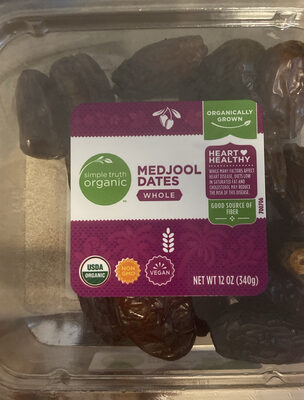
Simple Truth Organic
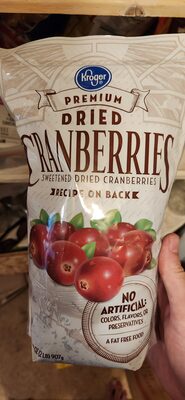
kroger
Frequently asked
Are dried cranberries bad for gout?
Most bags are a poor choice, because the sweetness is added. Fresh cranberries have about 4 g of sugar per 100 g, but of 112 US dried-cranberry labels we checked, 87% list sugar as an ingredient and the median bag runs 67.5 g of sugar per 100 g, slightly more than raisins. Unsweetened bags exist but are rare.
Are raisins bad for gout?
Raisins are low in purines, but drying concentrates the grape's sugar to about 65 g per 100 g, and roughly half of that is fructose (USDA). A small 30 g handful carries about 10 g of fructose. A few raisins are fine; a snack bag is a real fructose load.
Are dried apricots good for gout?
Among dried fruit, apricots and prunes are the better picks: USDA data puts their fructose at roughly 12 to 16 g per 100 g, versus 30 g or more for raisins and dates. Buy them unsweetened and keep to a small handful.
Are dates OK for gout?
Medjool dates are about two-thirds sugar by weight, and roughly half of that sugar is fructose, which makes them one of the most fructose-dense dried fruits. One or two dates is a modest amount; date-sweetened bars and 'no added sugar' energy balls add up quickly.
See also how to spot hidden gout triggers on any label. Browse all dried fruit we've scored. Related: Chocolate and gout · Popcorn and gout · Granola and gout · Nuts and gout · Yeast extract and gout · Pretzels and gout.